
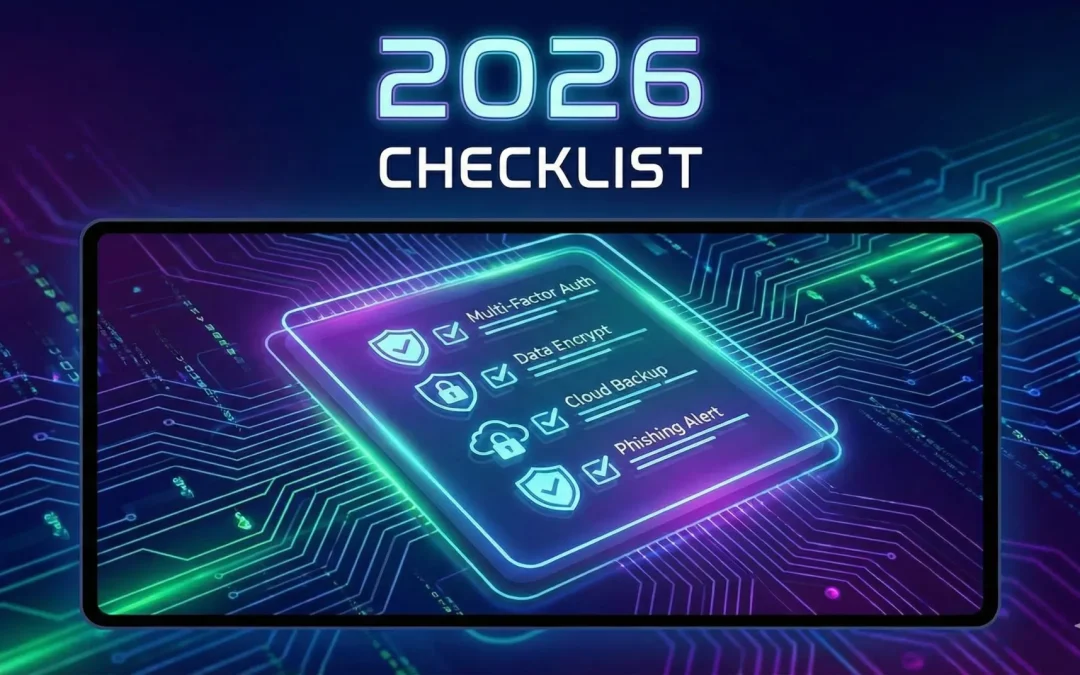
The start of a new year is the ideal opportunity to evaluate and strengthen your cybersecurity posture. While many organizations postpone these reviews for "later," incidents do not wait. A security breach can cost more than the investment in prevention and seriously affect your company's operation, reputation, and continuity.
This 2026 Cybersecurity Checklist is designed for owners, CEOs, and IT leaders who need a quick, clear, and actionable assessment of their company's security before moving forward into the year.
1. Check that your licenses and patches are up to date
Every piece of software you use (Microsoft 365, antivirus, servers, and operating systems) must have:
- Valid licenses and active support.
- Security patches applied regularly.
- Automatic updates scheduled whenever possible.
Why it matters: Exploited vulnerabilities are one of the most common causes of attacks and are often linked to systems without updates. Recommended Action: Request a software inventory including expiration dates and applied patches.
2. Validate that your backups are reliable
Having backups is different from being able to recover data when you actually need it. This year, many companies discovered their backups had flaws or were inaccessible when the time came to restore them.
Minimum Backup Checklist:
- Perform test restores.
- Verify the integrity of stored data.
- Ensure off-site or cloud versions exist.
Recommended Action: Schedule a recovery test with your team or provider.
3. Confirm that access policies are well-defined
A frequent risk is that former employees or third parties still retain access to critical systems. This includes:
- Corporate email.
- Servers.
- Administrative panels.
- Management applications.
Why it matters: Unnecessary access facilitates internal and external attacks, increasing the risk surface without the need for complex technical vulnerabilities. Recommended Action: Review and update profiles and roles every quarter.
4. Enable Multi-Factor Authentication (MFA) on all critical access points
Strong passwords are not enough: many breaches start with compromised credentials that did not have MFA enabled.
What to review:
- Corporate email.
- Access to Microsoft 365.
- VPN or remote access.
- Administrative panels.
Recommended Action: Require MFA for all users with sensitive access.
5. Confirm that your antivirus is not just installed, but active and monitored
Today, simply having an antivirus installed does not mean your company is protected. Without monitoring, threats can go unnoticed until it is too late.
The minimum you should ask for:
- Regular detection reports.
- Alerts configured for critical events.
- Integration with response tools.
Recommended Action: Request evidence of active monitoring.
6. Ensure perimeter and network security
Including a next-generation firewall, segmenting your network, and establishing clear rules helps mitigate common attacks and prevents a breach from spreading to other resources.
Minimum Network Checklist:
- Firewall with updated policies.
- VLAN segmentation for critical services.
- Remote access control.
Recommended Action: Audit rules and segments with your team or provider.
7. Train your team to recognize basic cyberattacks
80% of breaches start with human error, such as a phishing email or downloading a malicious file.
Essential Training Topics:
- Identifying suspicious emails.
- Password best practices.
- Not sharing credentials.
Recommended Action: Schedule quarterly awareness sessions.
Executive Conclusion
This 2026 cybersecurity checklist does not cover every possible scenario, but it allows you to validate the critical points that could cause severe operational disruptions this year.
It is not just about technology: it is about protecting your business, your revenue, and your reputation with clients and partners.
If any of these points present failures or if you need support to implement them effectively, MDS is ready to help you with a professional assessment—without useless technical jargon and focused on the business.