Introduction
In recent years, companies have accelerated their digital transformation. However, many organizations hit an invisible wall: their technological tools do not adapt to the real way they operate.
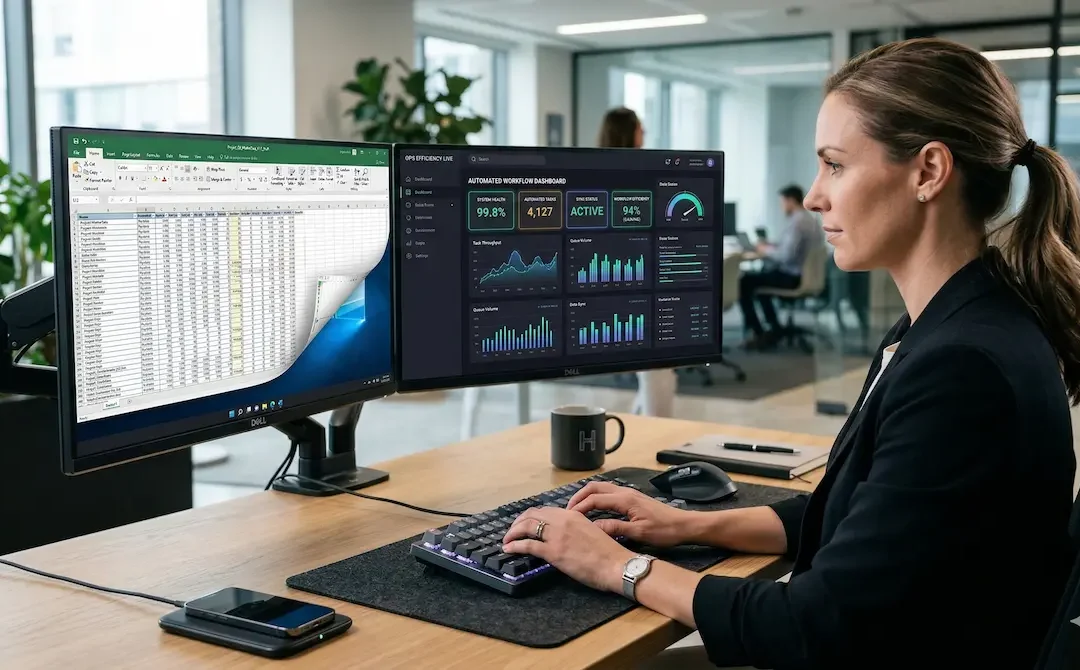
It is common to see companies using a "Frankenstein" of platforms: a rigid ERP, parallel Excel spreadsheets, and manual processes to fill the gaps that the standard system ignores.
In 2026, custom enterprise software is no longer a luxury for giant corporations. It is a strategic decision that allows businesses to automate processes, integrate systems, and scale without friction.
The Limits of Standard Software: When Technology Slows You Down
Commercial solutions like ERPs or CRMs play a fundamental role. However, when the company grows or has highly specific processes, problems arise:
- Forced Processes: The company ends up adapting its workflow to what the software allows, losing agility.
- Information Silos: By using multiple non-communicating platforms (billing, logistics, CRM), data is duplicated, and reports take days to generate.
- Hidden Costs: You end up paying for expensive licenses for modules your team never uses, or paying for costly "customizations" to ERP vendors that fall short.
When this happens, technology stops being an enabler and becomes a bottleneck.
Strategic Benefits of Custom Software
Custom software isn't just about "writing code"; it's about building a tool meticulously aligned with your business strategy.
- 100% Adaptation: The system is designed based on how your company operates, not the other way around.
- Automation of Repetitive Tasks: Approvals, report generation, and data cross-referencing are done in seconds, freeing your team for higher-value tasks.
- Total Integration: It can connect via APIs with your current infrastructure (your accounting ERP, CRM, cloud tools, etc.), creating an ecosystem where information flows seamlessly.
- Real Scalability: It grows with you. You can add new modules next year without having to migrate platforms entirely.
- Security and Control: You own the data. You can establish access policies and traceability (who did what and when) tailored to your needs.
When is the Right Time to Invest in Custom Development?
If you identify with any of these scenarios, it’s time to evaluate a custom solution:
- Your critical processes rely on multiple Excel spreadsheets emailed back and forth.
- Your team spends hours consolidating information from different platforms just to build one management report.
- You pay for expensive standard software but only use 20% of its features.
- You need a specific portal for your clients or suppliers to interact with your company automatically.
How to Successfully Approach a Software Project
Modern development, supported by Cloud infrastructure, allows for the creation of fast and scalable solutions without buying physical servers. For the project to succeed, at MDS we follow these steps:
- Operational Diagnosis: We understand your business before touching a line of code.
- Architecture Design: We define how it will integrate with your current systems.
- Agile Development: We deliver functionalities in stages so you can see results quickly.
- Implementation and Adoption: We train your team to ensure the tool is actually used.
Conclusion
Organizations that invest in technological solutions designed specifically for their operational reality not only optimize their processes but also future-proof their capacity for growth.
At MDS, we help companies identify areas for improvement and develop custom software that boosts profitability.
📩 Schedule a tech consultation with us and let's design the tool your operation truly needs.